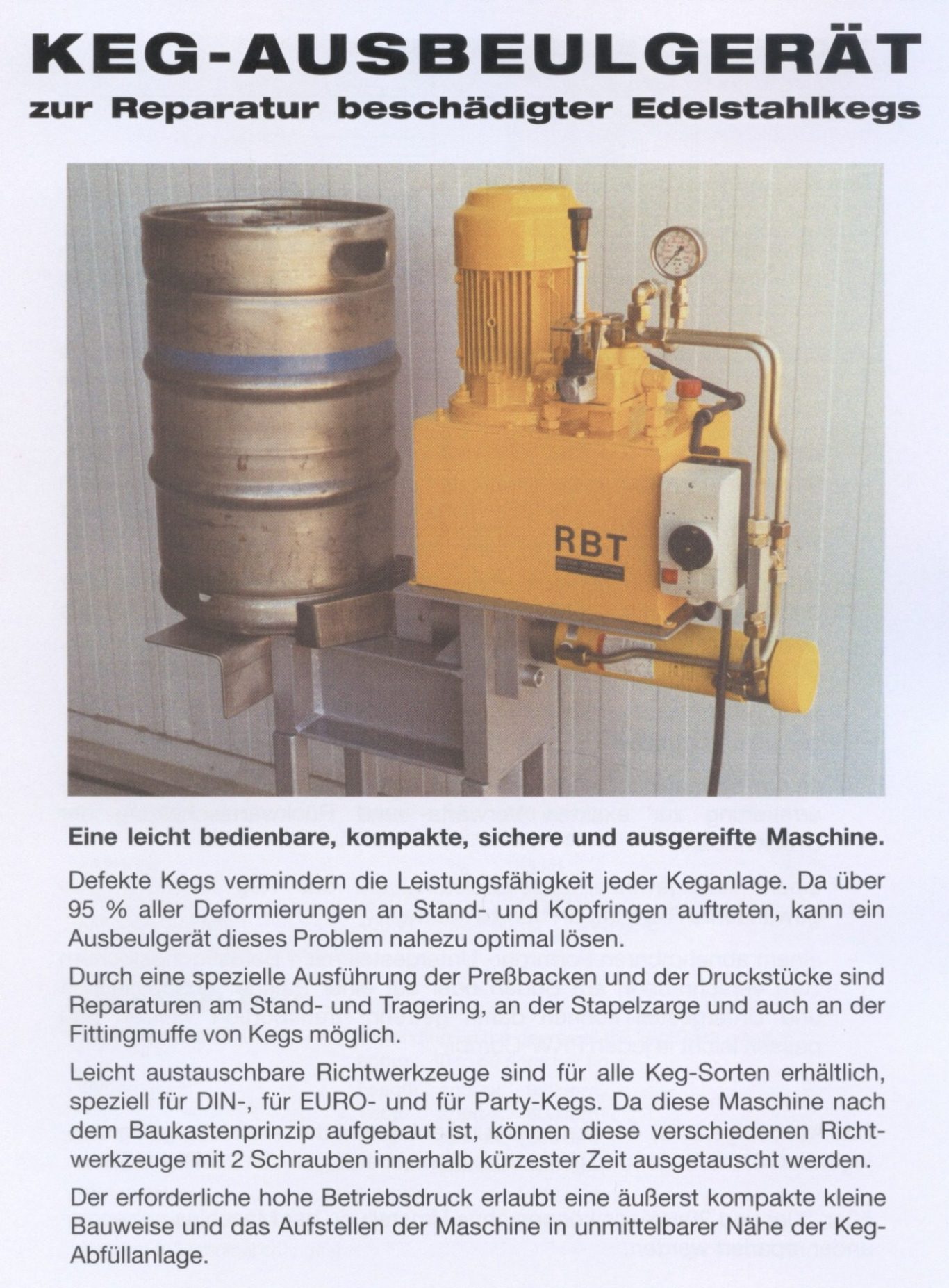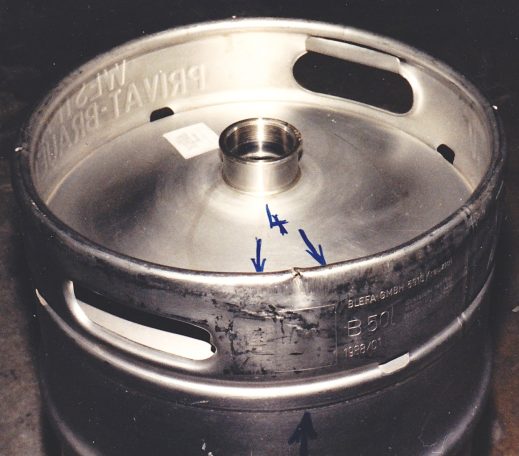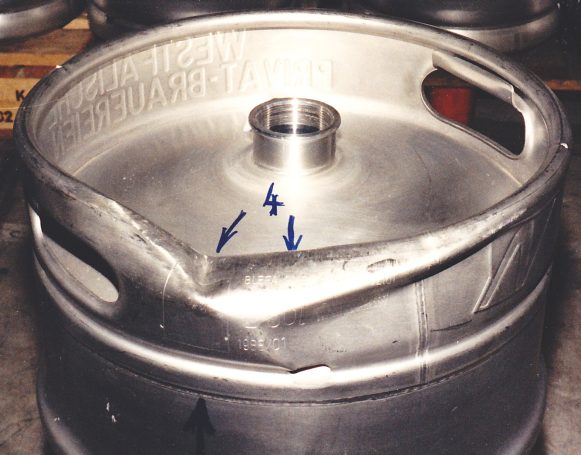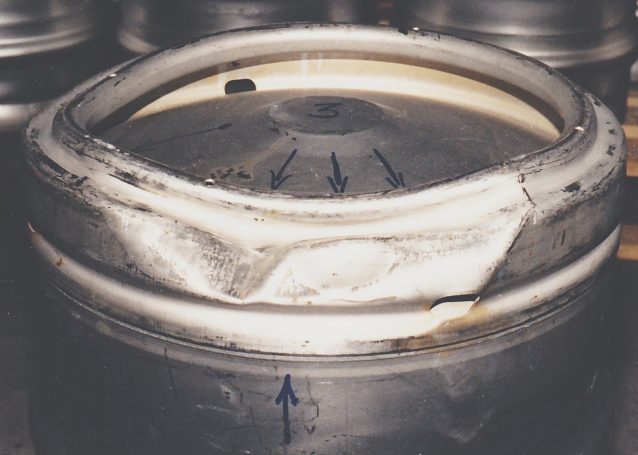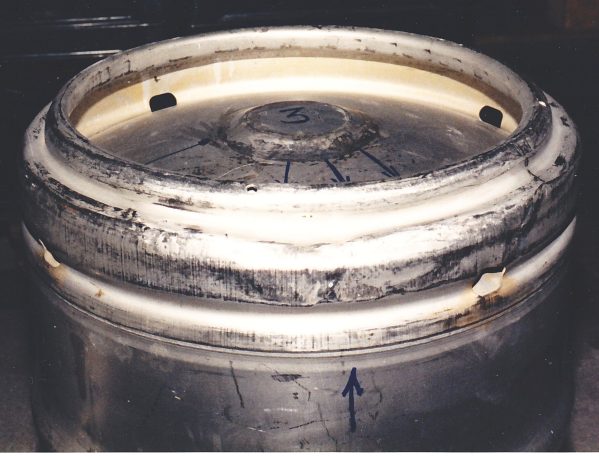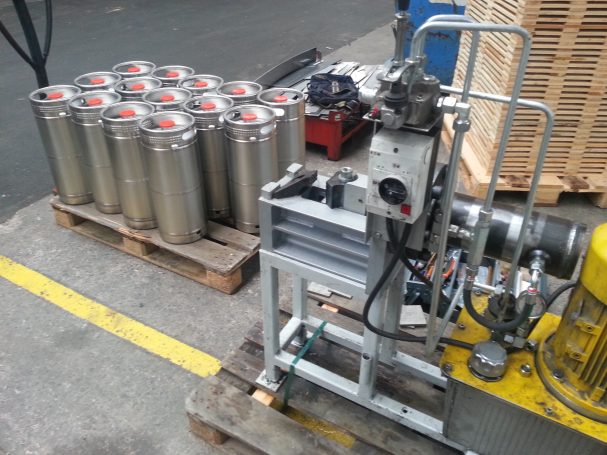
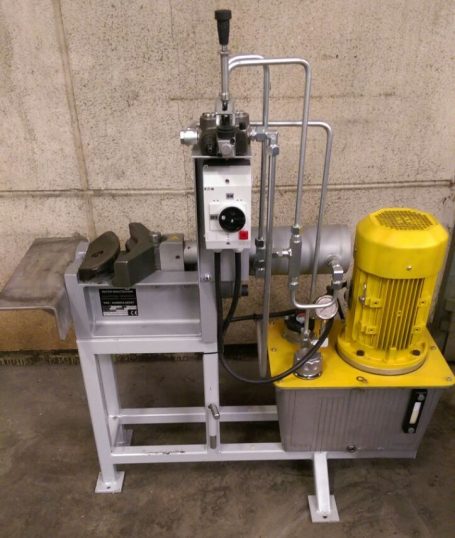
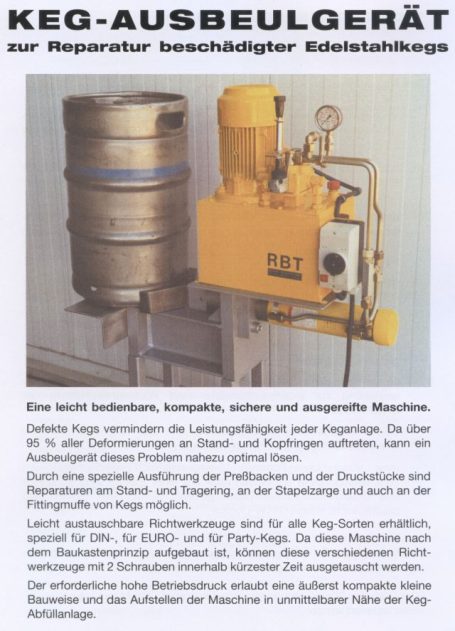
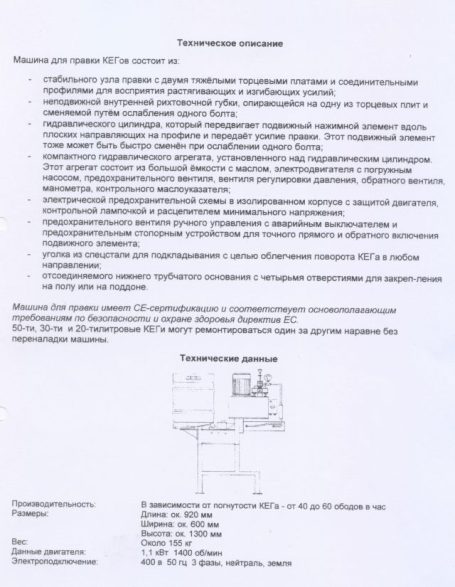
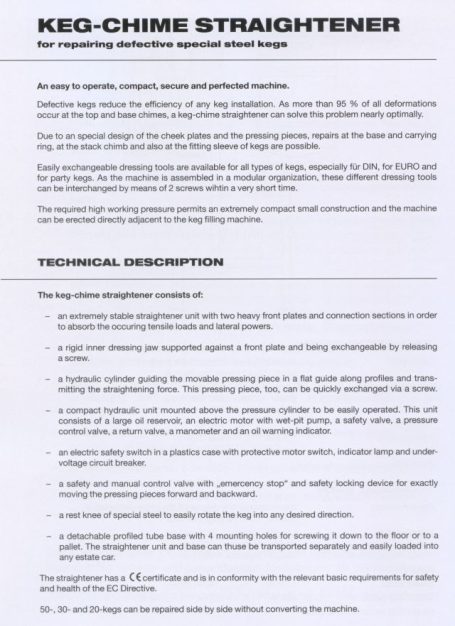
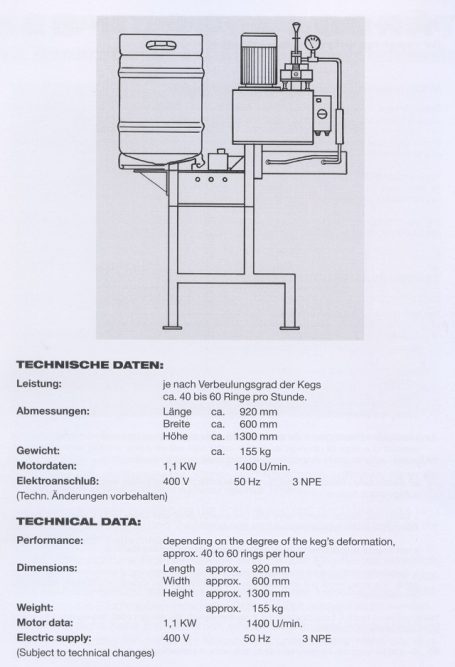
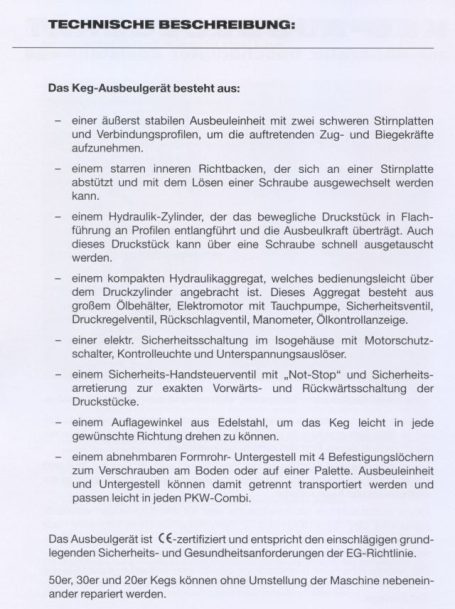
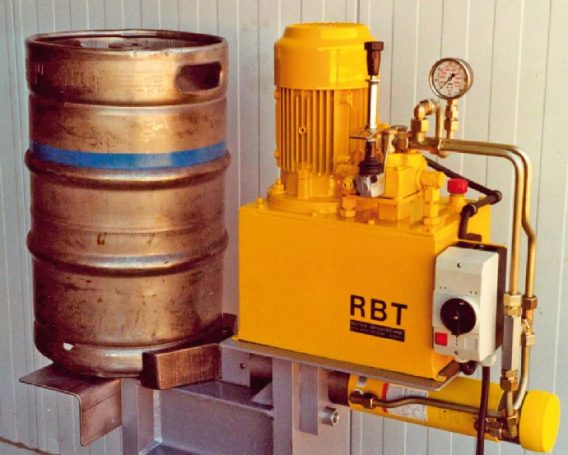
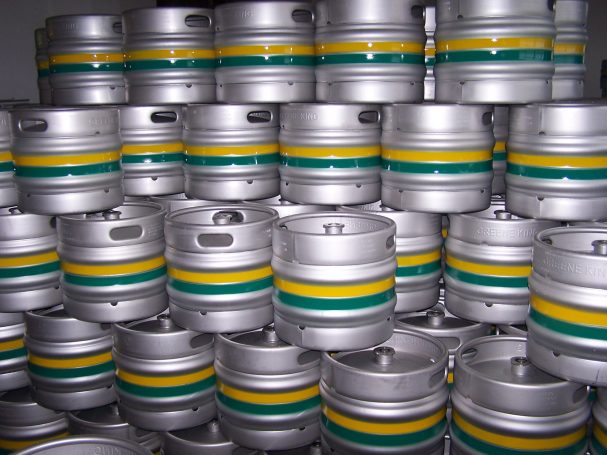
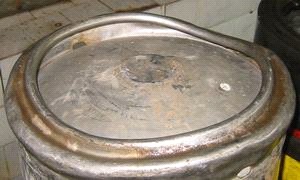
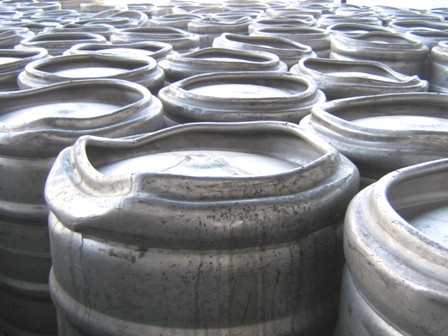
how the keg-filling line runs efficiently Pool-maintenance / For over 60 years, beer has been filled and transported into cylindrical beer barrels – kegs and is dispensed in the catering industry, at events and other occasions. Designed for long term usage and a long live cycle, kegs can only be rendered useless by heavy damage. Still, in most cases these damages can be repaired, and therefore the product quality, customer satisfaction and filling line efficiency can be maintained at a high level. At market launch, the expected life time of a stainless-steel keg was 12 years. The reason, among other things, is the different handling. In comparison to wooden barrels and casks, kegs are not rolled and dropped down on a gunnysack in the beer cellar. Instead, they are moved more gently with their grip holes or by using special utilities and stored below the counter in a fridge. This has made keg usage much smoother and more sustainable, keeping them in fleet and circulation for significantly longer times. As long as the keg body is not damaged by freezing or overpressures, it can be repaired almost certainly. Therefore, the keg stock is very durable and can be used with high efficiency. First keg manufacturers are starting to offer a 30 years’ warranty. EFFICIENT OPERATION OF A KEG FILLING LINE 29052017 damages Damaged kegs often interrupt automated filling lines. These disruptions can be annoying and cost time and money. Their causes are often visible with the naked eye, but can also be less obvious such as damaged extractor tubes. Worn or faulty sealings can only be identified by beer-foam leaking at the CO2-valve of the filled keg. In many cases, metal parts of the extractor tube cause damages which can mostly be related to unauthorized manipulation. The common keg damages include bent bottom or top chimes as well as shaped-out necks (muffles), caused by inappropriate transport or storage. Such kegs cannot be positioned properly at the filling line, leading to separated or rejected kegs. It might even cause the production line to break down. In the worst case, they are not cleaned properly or leave the production line filled insufficiently. Both generates extra costs and decreases the filling line efficiency. When filling line performance falls below 80%, the process is uneconomic. In numbers, a filling line with a plant system rating of 60 kegs 50 Litre per hour only has an output of 48 kegs per hour. This means, 12 kegs per hour are sorted out and have to be replaced by new ones. Consequently, more time and material is needed to match the planned sales targets. what’s to do – measures/remedies After the season, many breweries store their kegs without any inspection or maintenance. If, in the new season, the keg runs immediately into the filling line, the result will be a poor filling performance caused by possible damages. Therefore, many breweries have started to service their keg stock regularly, either conducted by specialized service providers or trained brewery stuff. Several machines and diverse equipment are available on the market which can be implemented into the workflow in different ways. Some breweries use the keg service equipment on-line: Rejected kegs will immediately be straightened at bottom / top-chime as well as neck muffle and will be returned back into the filling line. The keg geometry is now back within the tolerance limits according to DIN 6647-1 (ff) or the manufacturer's tolerance field. It runs smoothly and without interrupts through the filling line, being cleaned and filled properly again. In this way, the filling performance can be maintained on a high level throughout the season. However, extractor tubes should be serviced separately and, according to the manufacturer's recommendations, be replaced regularly. The same applies to the rubber parts (CO2-valve and neck seal). It is recommended to completely disassemble the extractor tubes and to clean the metal parts in an ultrasonic citric acid bath. Precipitates such as beer stone will be removed and potential corrosion will be stopped by passivating the surface. Subsequently, the extractor tube will be reassembled with new (originally from the extractor tube manufacturer) rubber parts. They are now as good as new and ready for re utilisation. To keep track of the keg fleet and to plan maintenance work it's helpful to collect data of keg circulation and service terms in a database. Based on appropriate solutions for the collection of the data, the brewery automatically gets directions from EFFICIENT OPERATION OF A KEG FILLING LINE 29052017 the system when to change a CO2-valve for example. Efficient means for data collecting may be the keg number, RFID-transponder, barcodes or other keg identifications. The optical markings of the CO2-valve manufacturers are helpful as well. A complete and updated overview of the whole keg fleet of the brewery shows the condition of the whole stock in general and particular. Thus, the brewery staff knows how many kegs are ready for the next season, how many need service and how many need an extractor tube replacement. Like this, it's easier to decide when protective action is needed and the budget can be estimated more precisely. In the long run, this procedure will pay off. The collected data is a good base to decide what to do: to buy new kegs? To run a service? Or maybe even buy one's own keg-chime straightener machine to be able to react quickly without seasonal impact. Certainly, these decisions have to be made by each brewery individually. The size of the brewery, the quantity of kegs, the current keg management and last but not least the location of the brewery has an impact on these decisions. Besides the quantity of kegs, the keg circulation per year is a good index. In areas with a lower density of breweries, the investment in a keg-chime straightener and an extractor tube service are more attractive. In areas with well-established service providers, their service is often cheaper. Apart from that experience has shown that buying new kegs in the main season is often more expensive and delivery periods tend to be very long. On the other side, unused kegs are often available in breweries. Together with the rejected kegs from the filling line, it's often possible to master a seasonal peak when the kegs can be repaired quickly. Keg-chime straightener machines like the one from REITER-BRAUTECHNIK offer a good solution in these cases. machine solution The REITER-BRAUTECHNIK keg-chime straightener machine is robust and designed for a long-life cycle. The Keg chime-straightener is certified by the German TÜV. The optimised tool-sets have a modular design and are available for almost all of the common keg and cask types (DIN / EURO / party-kegs / slim-Kegs,…). The operation of the machine is simple. In a short time, the operator understands how the machine works and is able to fix even heavier damages. With a hand bar (ergonomic height) the tools are constrained and released again. With the other hand, the keg can be rotated until the damaged part is reshaped. The stiffening roll on the bottom - / top-chime is not affected by this procedure. The exchange of the tools is done in seconds; only two screws have to be unlocked. Because of the EFFICIENT OPERATION OF A KEG FILLING LINE 29052017 specialised design of the cheek plate and pressure piece, bent top-chimes and (stackable) bottom-chimes can be straightened rapidly. With the included keg-sleeve adapter, necks (muffles) can be adjusted along the axis. For that, the keg remains clamped within the tools of the keg-chime straightener. An adapter with a lever handle will be shoved over the neck (muffle) or the extractor tube flange and pressed into the centre. If the neck (muffle) is impressed deeply into the body, a hydraulic Neck straightener neck-correction unit is required. Often the machine is used outside the main season, usually accompanied by the regular service and replacement of the extractor tubes. Top chime before Bottom chime before summary after repair after repair Returned half-filled kegs by customer’s complaint or damaged kegs are a waste of money, besides lowering the breweries reputation. Unused kegs equate unused capital occupying storage space in the warehouse. The costs for service and repair of those kegs are approximately within a price range of 2,50 € to 6,00 € per keg. The prices vary, depending on the service provider, the number of kegs and the expenditures for logistics. The investment in a preventive keg-chime straightener or keg-service can amortise / pay itself off in a short period of time. After 4000 to 5000 kegs maintained with the keg-chime straightener machine, the process is profitable. The time exposure for filling the kegs decreases and the keg-stock needs no reserve for potential malfunctions. If the filling line performance is close to 100%, the preventive measures are profitable.